Tag der Deutschen Einheit: History & Traditions on Oct 3
What is Tag der Deutschen Einheit? If you live in Germany or have spent an autumn here, you have likely noticed that on October 3rd, the bustle of...
Read more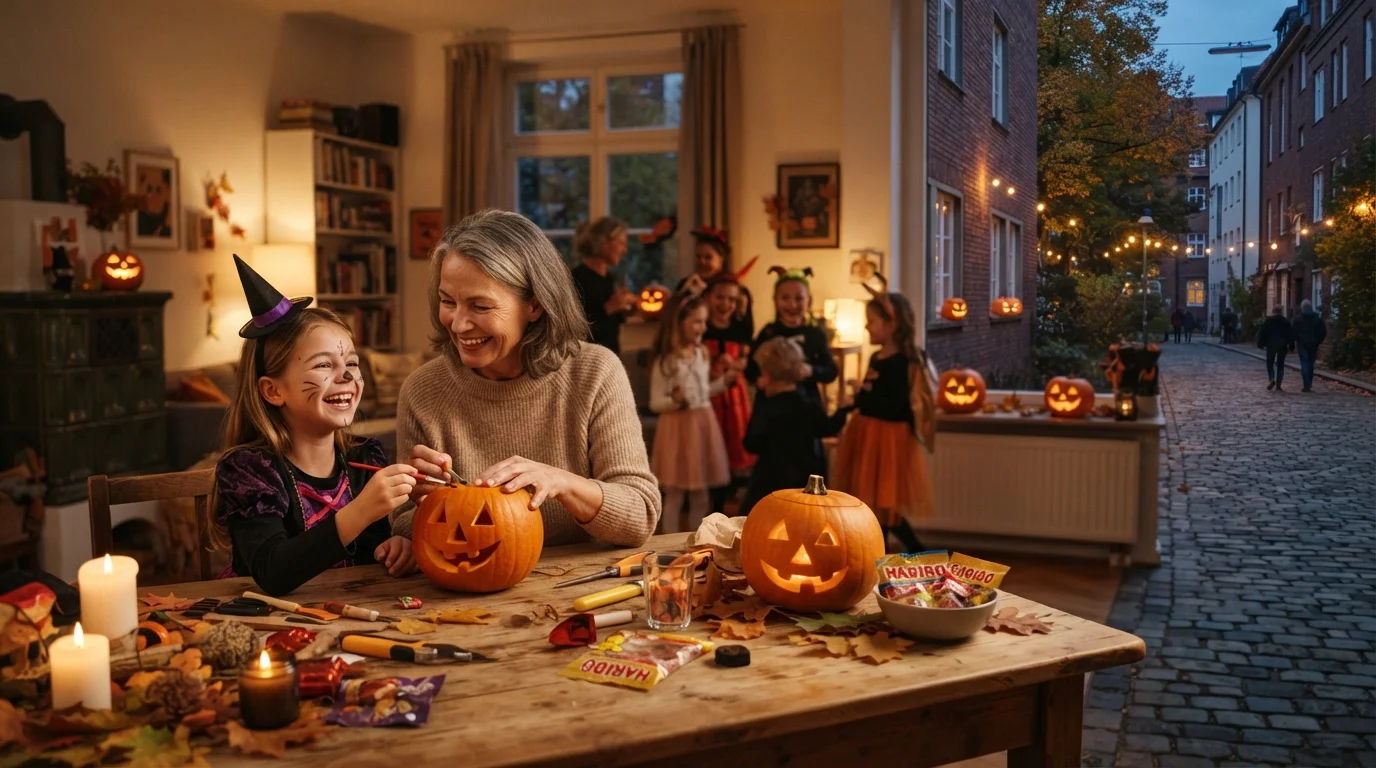
As October draws to a close, a distinct shift sweeps across Germany. Bakeries display marzipan ghosts alongside hearty pumpkin pastries, shops deck their windows in autumn foliage and cobwebs, and residential streets slowly illuminate with glowing carved pumpkins. Yet, if you ask a local how they feel about Halloween, you are likely to hear contrasting answers ranging from enthusiastic party plans to spirited defenses of local German heritage.
Halloween on October 31st occupies a fascinating, multifaceted place in modern Germany. It is not simply a direct copy of American trick-or-treating; rather, it exists alongside deeply rooted religious holidays—namely Reformationstag (Reformation Day) and Allerheiligen (All Saints' Day)—as well as the upcoming children's festivities of Sankt Martin. For expats, newcomers, and German language learners, understanding this cultural intersection is essential for navigating daily life, autumn party etiquette, and even public holiday schedules.
Here is your comprehensive cultural guide to how October 31st is observed in Germany, the vital German vocabulary you need to celebrate, and the subtle legal and social rules every resident should know.
Before buying candy or picking out a costume, the first thing anyone living in Germany must check is the calendar. October 31st is not just spooky season—it is an official public holiday (gesetzlicher Feiertag) across nine federal states, known as Reformationstag. Commemorating Martin Luther posting his Ninety-Five Theses in Wittenberg in 1517, this Protestant milestone is an official day off in:
If you live in one of these northern or eastern states, supermarkets, post offices, and shops are closed on October 31st. Meanwhile, across the southern and western states—such as Bayern, Baden-Württemberg, Nordrhein-Westfalen, Rheinland-Pfalz, and Saarland—October 31st is a regular workday, but November 1st (Allerheiligen / All Saints' Day) is a public holiday instead.
This geographic divide often creates lively cultural friction. Traditional church communities frequently encourage children to celebrate Luther's legacy with special pastries (such as Reformationsbrötchen) instead of dressing up as ghouls. If you are preparing for civic milestones like the naturalization exam, recognizing these state-specific public holidays is a core element tested in the Leben in Deutschland syllabus.
Compared to longstanding German customs, Halloween is a relative newcomer. While Celtic seasonal rituals (Samhain) historically influenced parts of Europe, the commercialized version of Halloween only took firm hold in Germany in the early 1990s.
A curious historical event accelerated its adoption: in 1991, the outbreak of the Gulf War led German carnival organizers to cancel large public celebrations of Karneval / Fasching out of respect for wartime casualties. Facing substantial economic losses, costume manufacturers and the German toy industry association promoted Halloween in autumn as an alternative occasion for dressing up. Over the following decades, the holiday gained widespread commercial momentum. Today, retail displays, cinema horror marathons, and themed club events are fixtures of late October life.
Halloween in Germany is celebrated as an evening of costumed parties, neighborhood candy walks, and themed autumn events, though its popularity varies significantly between urban centers and conservative rural towns. In major metropolitan areas like Berlin, Cologne, Hamburg, and Munich, Halloween has evolved into a staple nightlife event, filling bars, music venues, and university clubs with costumed revelers. Students and young professionals embrace the spooky themes, while specialty stores and costume outlets see their busiest week outside of the February carnival season.
In contrast, suburban and village life approaches the holiday with measured boundaries. While children in modern housing developments eagerly participate in late-afternoon trick-or-treating, older generations often view the custom as an unnecessary American commercial import. Despite this generational gap, consumer interest continues to expand: German households now spend millions of euros annually on pumpkins, decorative lights, and confectionery for late October. The celebration serves as a playful cultural hybrid that coexists alongside regional traditions rather than displacing them.
A typical German Halloween focuses heavily on genuinely scary, spooky outfits—such as witches, vampires, skeletons, and zombies—rather than the humorous or pop-culture disguises often seen in the United States. While American Halloween welcomes movie superheroes, cartoon characters, and ironic political outfits, German partygoers generally reserve whimsical and comedic costumes for Karneval (or Fasching) in February. For October 31st, the expectation remains decidedly macabre, featuring fake blood, gothic makeup, and classic monsters.
Culinary celebrations on October 31st also highlight German seasonal cooking. When hosting Halloween gatherings or cozy autumn dinners, Germans frequently prepare dishes spotlighting Hokkaido and butternut squash. Warming bowls of spiced pumpkin soup, roasted pumpkin seeds, and hearty breads pair naturally with wider German autumn comfort foods like Kürbissuppe and roasted chestnuts. Many host families prepare spooky finger foods for children, including "witch finger" almond cookies (Hexenfinger) and mini sausage "mummies" wrapped in puff pastry, blending regional ingredients with playful horror aesthetics.
Does trick-or-treating happen in Germany? Yes, but with distinctly German parameters. The tradition is most popular in quiet suburban neighborhoods, residential housing estates, and family-oriented apartment communities, rather than dense inner-city commercial avenues.
Children in Germany do not shout "trick or treat" in English. Instead, you will hear children call out:
Some children recite charming rhymes before extending their bags, such as:
"Geister schreien, Hexen lachen, gebt uns bald was Süßes raus, sonst spukt es gleich in eurem Haus!"
(Ghosts shout, witches laugh, give us something sweet soon, or your house will be haunted!)
In Germany, boundaries of domestic privacy (Privatsphäre) are highly respected. Trick-or-treaters do not knock on every door on a street. The unwritten standard dictates that children only ring doorbells at houses or flats that have placed a glowing, carved pumpkin (Kürbislaterne) or Halloween decorations outside. If a home is dark with no spooky decor, children pass it by without knocking.
While lighthearted pranks—such as wrapping a garden bench in toilet paper—occasionally occur, real mischief is strictly frowned upon. In Germany, damage to property (Sachbeschädigung), such as throwing raw eggs at house walls, can result in police involvement and civil liability for parents (Eltern haften für ihre Kinder). German society places tremendous value on tidiness and public order, so the focus remains firmly on collecting confectionery.
German Halloween traditions center around pumpkin carving (Kürbisschnitzen), neighborhood sweet-collecting, and themed horror nights, while naturally intersecting with older regional folklore about autumn harvests and spirits. Even before commercial Halloween took root in the 1990s, German farm regions observed customs connecting seasonal harvest cycles with lighting the dark. In parts of southern Germany and Switzerland, the older practice of Räbeliechtli involved children carving hollowed turnips or fodder beets and placing small candles inside, anticipating the long winter months much like early Celtic customs.
These older harvest customs share historical roots with Erntedankfest, Germany's autumn thanksgiving tradition, where communities give thanks for agricultural bounty before winter arrives. Today, German Halloween traditions combine these rustic agricultural elements with contemporary thrills. Across the country, family-run pumpkin farms open seasonal mazes, bakeries craft seasonal squash pastries, and households light their Kürbislaternen on front porches, honoring both modern festive fun and time-tested autumnal warmth.
If you want to experience spine-chilling festivities beyond trick-or-treating, Germany hosts several spectacular events:
For those who prefer quieter seasonal celebrations, late October offers a serene transition. As the warm golden glow of the lingering warmth of Altweibersommer fades into crisp autumn air, many German households prefer gathering indoors for seasonal comfort food. Inviting friends over to enjoy warm pumpkin soup, plum cake, and aromatic coffee aligns naturally with traditional German Kaffee und Kuchen etiquette.
If you plan to attend a vibrant Halloween party or a costumed club night on the evening of October 31st, you need to understand a unique German legal concept: der stille Feiertag (the silent holiday).
Because November 1st is Allerheiligen (All Saints' Day), a solemn Catholic day dedicated to remembering the deceased, several southern and western states enforce a strict ban on public dancing and loud music (Tanzverbot). In states like Bayern, Baden-Württemberg, and Nordrhein-Westfalen, parties and music venues must lower their volume or close their dance floors precisely at midnight—or even earlier—to respect the solemn atmosphere of November 1st.
Always verify local club schedules in advance; venues frequently begin Halloween parties earlier on October 31st to ensure guests can celebrate before legal quiet hours take effect.
To converse comfortably with neighbors, shop for costumes, or help your kids prepare for an evening stroll, practice these core German terms:
| German Word | English Meaning |
|---|---|
| der Kürbis, -se | The pumpkin |
| Kürbis schnitzen | To carve a pumpkin |
| das Gespenst, -er / der Geist, -er | The ghost / phantom |
| die Hexe, -n | The witch |
| das Skelett, -e | The skeleton |
| die Fledermaus, -"e | The bat |
| gruselig | Creepy / spooky |
| sich verkleiden als... | To dress up / disguise oneself as... |
| die Süßigkeiten (pl.) | Sweets / candy |
| der Streich, -e | The prank / trick |
You cannot understand the debate surrounding Halloween in Germany without knowing about Martinstag on November 11th. Many traditionalists view Halloween with skepticism because Germany already possesses a beloved, centuries-old late-autumn celebration centered on children and light.
On St. Martin's Day, kindergarten and primary school children carry handcrafted paper lanterns (Laternen) through evening streets in solemn processions called the Laternenumzug. Accompanied by marching bands, they sing traditional folk songs like "Ich geh' mit meiner Laterne" and reenact the story of Saint Martin sharing his military cloak with a freezing beggar. Afterward, children receive sweet pastry figures called Weckmänner or Stutenkerle and occasionally go house to house singing songs in exchange for fruit and sweets.
Today, many German families happily celebrate both: children enjoy the playful, scary thrills of Halloween on October 31st, followed by the reflective, community-oriented warmth of Martinstag less than two weeks later.
Navigating seasonal traditions, state-level holidays, and everyday conversational German can feel complex when you first arrive. Whether you are learning to articulate what costume you are wearing or studying regional public holidays for your German naturalization test, consistent daily practice is the key to confidence.
The Bretzi app helps you master the authentic German used in daily life, work, and integration exams across every level from A0 to C1. Instead of artificial textbook sentences, Bretzi guides you through short, ordered lessons featuring dictation, word ordering, listening, and real dialogue from life in Germany.
If you want to practice discussing autumn festivals, describing your plans, or tackling tricky topics out loud, Bretzi's AI conversation partner, SprachBuddy, is available with Premium. SprachBuddy is software (which it clarifies before you begin) that lets you speak German aloud about everyday situations, giving you clear pronunciation feedback so you can hone your spoken German in a relaxed setting. Furthermore, if you are preparing for official milestones, Bretzi's dedicated B1 Einbürgerungstest practice modules cover critical questions on German history, culture, and federal holiday legislation.
As October 31st arrives, keep these practical points in mind:
Whether you choose to attend a costumed bash, carve pumpkins at home, or simply relax on a quiet autumn holiday, Halloween in Germany is a unique blend of imported excitement and time-honored heritage.
Rules, fees and dates change. Check the current version on the official pages before you act.
Share this article:
What is Tag der Deutschen Einheit? If you live in Germany or have spent an autumn here, you have likely noticed that on October 3rd, the bustle of...
Read moreSeptember in Germany has a flavor: slightly sweet, gently sparkling Federweißer served with a warm slice of savory Zwiebelkuchen. This seasonal...
Read moreHave you ever experienced a warm, golden autumn day in Germany when summer seems to return for one last visit? Germans have a beautiful word for this...
Read more