
Federweißer and Zwiebelkuchen: Germany’s September Taste
September in Germany has a flavor: slightly sweet, gently sparkling Federweißer served with a warm slice of savory Zwiebelkuchen. This seasonal...
Read more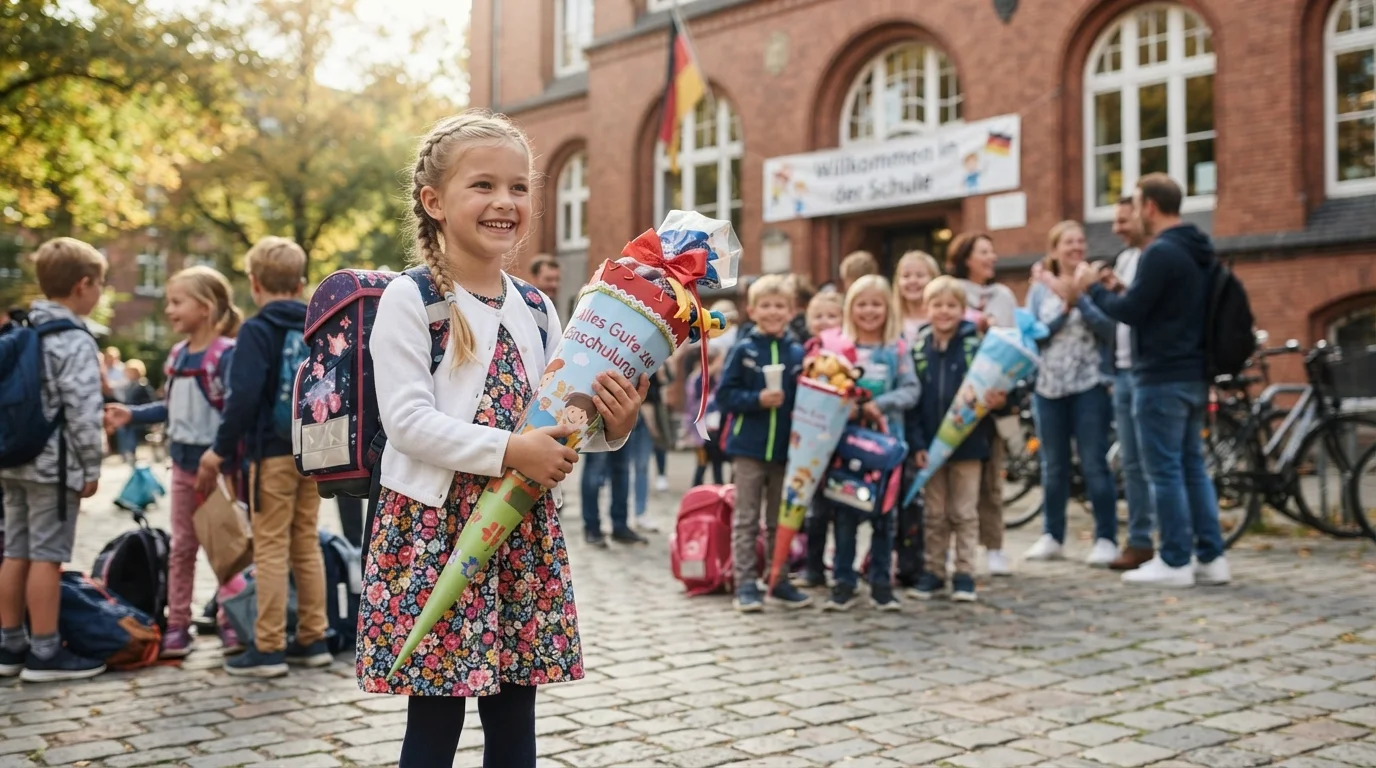
As September arrives in Germany, the lingering warmth of late summer begins to yield to crisp morning crispness. Shop windows across the country fill with vibrant displays of ergonomic backpacks, oversized cardboard cones, and colorful stationery. For families living in Germany, this signals one of the most significant cultural milestones of the year: die Einschulung (the official enrollment and first day of primary school).
Whether you are an expat parent preparing your child for their big day, a language learner aiming to understand German daily life, or someone preparing for a German integration exam (such as the DTZ - Deutsch-Test für Zuwanderer), understanding the vocabulary and traditions around Einschulung is essential. In this comprehensive guide, we will explore the core German vocabulary, cultural nuances, and practical phrases you need to navigate this heartwarming German tradition smoothly.
In Germany, starting first grade is not just an ordinary Monday morning—it is a major life celebration. Known as die Einschulung or der erste Schultag, the occasion usually takes place on a Saturday or Thursday in late August or early September, depending on the federal state (Bundesland).
First-graders, affectionately called die Schulanfänger, die Erstklässler, or traditionally die ABC-Schützen, attend a festive ceremony at their new primary school (die Grundschule). They are accompanied by parents, grandparents, siblings, and godparents. To learn more about how families celebrate this special event in detail, check out our deep-dive guide on how Germans celebrate Einschulung.
The centerpiece of the entire event is undoubtedly die Schultüte (also called die Zuckertüte in some regions)—a large, decorated paper cone filled with school supplies, toys, and sweets. According to historical records on the origin of the Schultüte, this tradition dates back to early 19th-century Saxony and Thuringia, where children were told that sweet cones grew on a tree in the school cellar and were ripe for picking when it was time for school!
German nouns are famous for their grammatical gender (der, die, das) and compound structures. Here is a curated list of key vocabulary for Einschulung, complete with their definite articles and English translations:
German schools are notorious for sending parents a detailed Materialliste (list of required school materials) before the term starts. Knowing these nouns will save you plenty of time at the stationery shop (Schreibwarengeschäft):
Building a Schultüte is an art form for German parents. While the bottom of the cone is often filled with crumpled paper or popcorn to save weight and add volume, the rest is stuffed with a mix of practical gifts and fun treats.
Common contents include small books (Erstlesebücher), reflex light clips for safety on the road (Reflektoren), small card games, keychains, and traditional sweets like gummy bears and chocolate figures. As families transition from relaxed summer routines—similar to those described in our article on post-summer transitions in Germany—the Schultüte softens the step into academic discipline with a pinch of sweetness.
If your neighbors, colleagues, or friends have a child starting school in September, it is customary to offer warm wishes or send a greeting card. Here are the most common expressions you can use:
After the morning school ceremony, German families typically gather at home or in a restaurant for lunch, followed by an afternoon coffee celebration. If you are invited to join a family on this special day, following classic German Kaffee und Kuchen etiquette will help you feel confident and make a great impression as a polite guest.
Communicating with school staff in German for the first time can feel intimidating. Here are practical phrases to help parent-teacher interactions run smoothly:
Learning compound nouns like der Grundschulrektor or remembering whether pencil case is das Etui, die Federtasche, or das Mäppchen can feel overwhelming. That is where targeted, modern language practice makes all the difference.
The Bretzi app helps language learners and expats master real-world German naturally through smart, interactive tools:
The first day of school in Germany is a joyful, festive milestone that highlights the country's deep appreciation for education, childhood, and family traditions. By learning key vocabulary like die Schultüte, der Schulranzen, and das Pausenbrot, you gain a richer appreciation of German culture while enhancing your daily communication skills.
Whether you are packing your child's first school cone or simply building your vocabulary for work and life in Germany, every new word opens doors to deeper integration. Download Bretzi today to practice personalized German lessons, conquer tricky articles, and speak conversational German with total confidence!
Share this article:
September in Germany has a flavor: slightly sweet, gently sparkling Federweißer served with a warm slice of savory Zwiebelkuchen. This seasonal...
Read moreHave you ever experienced a warm, golden autumn day in Germany when summer seems to return for one last visit? Germans have a beautiful word for this...
Read moreAs summer winds down and the morning air turns crisp, Germany undergoes a golden transformation. While millions of tourists flock to Bavaria for...
Read more