
Federweißer and Zwiebelkuchen: Germany’s September Taste
September in Germany has a flavor: slightly sweet, gently sparkling Federweißer served with a warm slice of savory Zwiebelkuchen. This seasonal...
Read more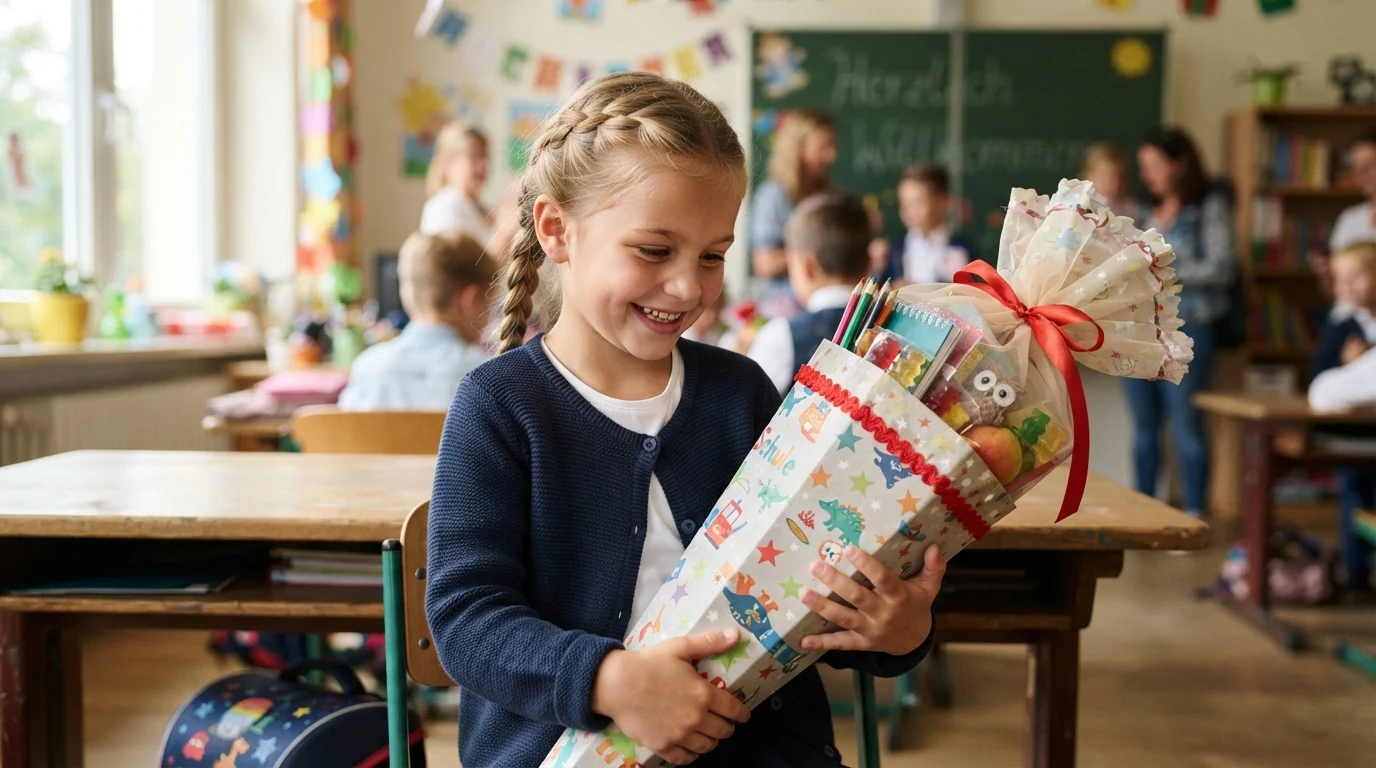
If you find yourself walking through a German town in late August or early September, you are bound to witness an enchanting spectacle: tiny first-graders dressed in their finest clothes, proudly clutching giant, brightly decorated cardboard cones that are almost as tall as they are. These iconic cones are called Schultüten (or Zuckertüten in parts of eastern Germany), and they represent one of the most cherished, heartwarming rites of passage in German culture.
For expats, immigrants, and language learners alike, encountering this tradition can feel both delightful and slightly bewildering. Why do German children carry these colorful paper towers? What is hidden inside them? And how did a simple cone filled with treats evolve into a nationwide milestone? In this comprehensive guide, we will unpack the fascinating history of the Schultüte, explore what modern parents pack inside, master key German vocabulary, and give you practical tips for navigating your child's first day of school in Germany.
A Schultüte (pronounced SHOOL-tyoo-tuh, plural: Schultüten) translates literally to 'school bag' or 'school cone.' It is a large, pointed cardboard cone—usually between 70 to 85 centimeters (28 to 33 inches) long—lavishly decorated with vibrant patterns, superhero motifs, animals, or fairytale themes, and capped with crepe paper tied securely with a ribbon.
The cone is presented to a child on their very first day of primary school (Grundschule), known across the country as the Einschulung. For a full breakdown of how families celebrate this momentous milestone, check out our guide on celebrating the Einschulung ceremony.
The primary purpose of the Schultüte is psychological and emotional: it sweetens the transition from the carefree play of kindergarten (Kita) to the structured world of formal schooling. In German folklore and common idiom, starting school marks the entry into "der Ernst des Lebens" (the seriousness of life). The Schultüte serves as a loving cushion against that seriousness, reassuring the child that while responsibilities are growing, life remains joyous and supported by family.
Unlike many modern commercial celebrations, the Schultüte has deep historical roots stretching back more than 200 years. According to historical records documented on Wikipedia's Schultüte archive, the custom originated in central and eastern Germany—specifically in Saxony and Thuringia—around 1817.
The earliest documented mention comes from Jena in 1817, followed shortly by reports from Dresden (1820) and Leipzig (1836). Back then, children were told a charming local myth: teachers kept a magical Zuckertütenbaum (sugar cone tree) growing in the basement or attic of the schoolhouse. When the cones grew large and ripe enough to pick, it was a sign that the children were finally ready to begin school!
Originally, godparents and grandparents would bring these cones to the schoolhouse in secret. After their first lessons, the young Schulanfänger (school beginners) would search for the cone bearing their name. Over the late 19th and 20th centuries, the tradition spread across all German states, as well as Austria and parts of German-speaking Switzerland, cementing itself as an indispensable part of Germanic childhood.
Historically, the cones were filled almost exclusively with pastries, pretzels, dried fruits, nuts, and traditional sweets—hence the regional name Zuckertüte (sugar cone). However, contemporary German parents strike a thoughtful balance between fun, nutrition, and practicality.
Pro-Tip for Packing: Heavy items (like water bottles or books) must always go into the lower-middle section, with soft tissue paper or crumpled newsprint stuffing the fragile pointed tip at the bottom. This prevents the tip from bending or snapping under weight and keeps the cone balanced when carried!
In Germany, DIY crafting (Basteln) is treated with tremendous affection. In the months leading up to September, most German daycare centers organize dedicated crafting workshops where parents (and sometimes children) build and customize their Schultüten from scratch.
Whether you choose to craft one by hand or buy a pre-made blank cone from a craft shop (Bastelladen) to embellish at home, making the cone together creates an unforgettable bonding experience. However, if you are short on time, premium store-bought cones—crafted from sturdy corrugated cardboard and embroidered felt—are widely accepted and equally cherished.
Alongside the main cone, you might also notice miniature versions called Geschwistertüten (sibling cones). These smaller 20-30 cm cones are given to younger brothers and sisters so they don't feel left out during the big brother or big sister's spotlight moment!
To help you speak confidently with teachers, parents, and neighbors during this celebratory season, master these essential terms:
For a deeper dive into school phrases and communicative patterns, review our dedicated list of essential school-starting German vocabulary.
If your child is starting school in Germany, here is what a typical Einschulung day looks like so you can prepare without stress:
The day usually begins with a welcoming assembly in the school gymnasium or auditorium (Aula). Older students (second or third graders) perform musical numbers, plays, or poems to welcome the newcomers. The principal delivers a warm speech, after which the class teacher calls out names to lead the new pupils into their classroom for their very first mini-lesson (about 30-45 minutes).
While the children are in the classroom, parents wait in the schoolyard. Once class dismisses, the real photography session begins! Every child poses holding their Schultüte and wearing their brand-new Schulranzen. These photos become family heirlooms that are framed and kept for decades.
After school wraps up around noon, families traditionally head home or to a restaurant for a celebratory lunch, followed in the afternoon by a traditional German Kaffee und Kuchen gathering with grandparents, godparents (Taufpaten), and close friends. Only then does the child finally open and unpack the magical contents of their Schultüte!
Understanding traditions like the Schultüte does more than satisfy your curiosity—it unlocks real cultural integration. Language and culture are inseparable; knowing the idioms, childhood memories, and social customs that native speakers share allows you to connect on an authentic, emotional level.
If you want to feel confident chatting with local parents, mastering school terminology, and acing integration exams, Bretzi makes the journey intuitive and fun. With Bretzi's AI-powered personalized learning plans and real-life conversational practice, you can practice daily scenarios—from greeting the teacher to ordering bakery treats for your family celebration—with instant pronunciation feedback and interactive dialogue games.
The German Schultüte is a shining example of how a cultural tradition can turn an intimidating milestone into an uplifting celebration. By combining thoughtful gifts, joyful anticipation, and family togetherness, it equips children with the confidence they need to embark on their educational journey.
Whether you are preparing your own child's first cone or simply building your cultural knowledge as a German learner, embracing the magic of the Schultüte brings you one step closer to truly understanding life in Germany. Alles Gute zum Schulstart!
Share this article:
September in Germany has a flavor: slightly sweet, gently sparkling Federweißer served with a warm slice of savory Zwiebelkuchen. This seasonal...
Read moreHave you ever experienced a warm, golden autumn day in Germany when summer seems to return for one last visit? Germans have a beautiful word for this...
Read moreAs summer winds down and the morning air turns crisp, Germany undergoes a golden transformation. While millions of tourists flock to Bavaria for...
Read more